
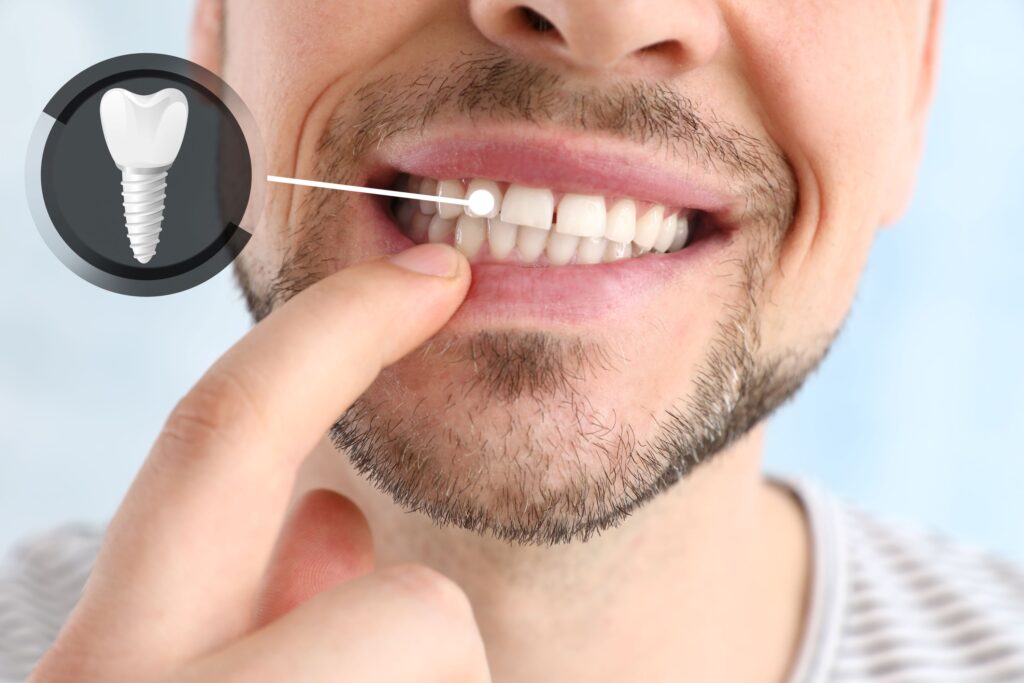
Many experts consider dental implants the ideal way to rebuild your smile after losing adult teeth because of their unique benefits. Unlike dentures and bridges, they’re surgically placed in your jaw and eventually fuse with the bone to become a more permanent and longer-lasting part of your smile.
Their unique positioning usually makes these restorations sturdier than the alternatives, but that doesn’t mean they’re invincible. For example, they can be harmed or destabilized, which can potentially cause them to fail. Read on to learn more about what might cause loose dental implants and how to get help quickly!
Why Does My Dental Implant Feel Loose?
These artificial teeth look and function more naturally than other options because they include a titanium rod that’s surgically embedded in your jaw. It can take three to six months to recover from this procedure because your mouth must generate enough new bone growth to fuse with this support in a process called osseointegration. Once that’s complete, your dentist can cement a restoration in place to close the gap(s) in your grin.
But if this process isn’t successful or if your jawbone is too thin to begin with, there’s a chance your implant won’t merge with the bone material successfully, which can cause it to become destabilized. You might also develop a loose prosthetic if you grind your teeth, use tobacco products after your surgery, or neglect your oral hygiene routine during recovery.
How Should I Handle a Loose Dental Implant?
This procedure has an incredibly high success rate of over 90%, meaning that most patients recover effectively without developing complications. However, if you’ve developed a loose implant, acting quickly is essential to try to save it before it’s completely dislodged. You should contact your provider as soon as you notice a problem so they can help you avoid total failure.
Also, paying attention to your dental condition after your procedure can help you notice changes that might point to a developing problem. For example, if your gums start to look dark or swollen around your new implant, it could be due to bacteria penetrating the tender tissues, leading to an infection that requires treatment.
How Will My Dentist Treat My Loose Dental Implant?
Whatever the cause of your destabilized restoration, it’s important to get help quickly to avoid progressively worsening problems. Many dentists offer salvage services for at-risk dental implants and can help address the underlying issue before your new tooth is lost.
When you arrive at the scheduled time, your provider will examine your condition and also take X-rays or other scans and images to see what’s happening beneath the surface. Then, they can devise a customized treatment plan, such as antibiotic therapy, to address the problem that’s putting your implant at risk.
Contacting your dentist for an appointment as soon as you notice any problems with your new dental implant can be a simple and effective way to help avoid potential failure!
About the Practice
Patients at Soleil Dental benefit from two providers who are eager to help families in Dallas build and maintain the healthiest and most beautiful versions of their smiles. Dr. Vazquez and Dr. Aldana collaborate to provide a comprehensive menu of services under one roof, including dental implant placement, restoration, and salvage. They have advanced training and state-of-the-art equipment to enhance patient comfort while delivering accurate treatment results that last. You can request an appointment on the website or by calling (214) 304-2112.