Smile studio · Facial aesthetics
BOTOX and Opus, from people who know your smile muscles.
Your smile doesn't stop at your teeth. At our Oak Lawn office we also offer BOTOX to soften expression lines and Opus plasma resurfacing to refresh skin texture. Dental teams spend their days working with the muscles and nerves of the face, which makes this a natural fit, and every treatment starts with an honest consult.
Why get BOTOX at a dental office?
It surprises people, but it makes sense. Dental training covers the anatomy of the face in depth: the muscles you use to smile, chew and frown, and the nerves that run through them. Precise injections are part of everyday dentistry, too.
Doing it here also means one team can think about your whole look at once. Whitening, veneers and the lines around your smile can live in one plan, in one place, with people who already know your face. At your consult you'll meet the provider who treats you, and you're always welcome to ask about their training and experience.
What BOTOX is and how it works
BOTOX is a purified form of botulinum toxin, one of the most studied cosmetic treatments there is. Injected in tiny amounts into specific muscles, it temporarily quiets the nerve signal that tells those muscles to contract. The skin on top stops creasing as deeply, so lines soften.
It works best on dynamic lines, the ones that appear when you make an expression. It doesn't add volume or lift sagging skin, and deep lines that are there even when your face is at rest may soften but not disappear. We'll tell you plainly what it can and can't do for your face.
Areas we treat with BOTOX
Most people come in about one or two of these. We'll look at how your face moves before deciding where, and how much:
- Crow's feet at the outer corners of the eyes
- Frown lines between the eyebrows
- Horizontal forehead lines
- Fine lines around the mouth
What a BOTOX appointment is like
First comes the conversation: your goals, your health history, any medications, and how natural you want the result to look. We look at your face at rest and in motion, then map out the injection points with you.
The injections themselves are quick, a few small pinches with a very fine needle, and most people are back to their day right after. Aftercare is simple and we'll go over it with you. It usually means staying upright for a few hours, not rubbing or pressing on the area, and skipping a hard workout for the rest of the day. A little redness or a small bruise at a point can happen and fades on its own.
How long does BOTOX last?
You'll usually start to notice a difference within about 5 to 10 days, and the full effect often shows around two weeks. Results typically last somewhere in the range of 3 to 6 months, and for many people it lands around three to four.
How long yours lasts depends on the area treated, the amount used, how strong and active those muscles are, and your own metabolism. Some people find that with regular treatments the muscles get used to being less active and the time between visits stretches a little. When it wears off, it wears off gradually, and your face returns to how it looked before. It doesn't end up worse.
Who shouldn't get BOTOX
BOTOX is a good fit for many healthy adults, usually from the late 20s on, but it isn't for everyone. We'll recommend waiting or skipping it if, for example:
- You're pregnant or breastfeeding
- You have a neuromuscular condition
- You've had an allergic reaction to a botulinum toxin product before
- There's an infection or irritation where we'd inject
- You take blood thinners, which may just mean planning around more bruising
Opus plasma skin resurfacing: what it is
Opus is a skin resurfacing treatment that combines plasma with fractional radiofrequency energy. A handheld tip delivers energy in a grid of tiny points. At the surface, the plasma works on texture; deeper down, the radiofrequency gently heats the skin to prompt new collagen, the protein that keeps skin smooth and firm.
Because it treats tiny points and leaves healthy skin in between, healing tends to be faster than with older, more aggressive resurfacing. People choose Opus to help with:
- Fine lines and wrinkles
- Rough or uneven texture
- The look of acne scars
- Dull or uneven tone
- Mild looseness, especially on the lower face
Is Opus better than microneedling or lasers?
Each has a place. Microneedling uses fine needles to create tiny channels in the skin and prompt healing. Lasers use light to heat or remove layers of skin, and the stronger ones can mean a week or more of downtime. Opus combines surface plasma with deeper radiofrequency, and many people find it a comfortable middle ground with shorter recovery than an aggressive laser.
Which one is better depends on your skin, your goals and how much downtime you can handle. If another treatment would suit your skin better, we'll tell you, even if it's something we don't offer here.
What an Opus session and recovery look like
We start with a numbing cream that sits for about 20 to 30 minutes. The treatment itself takes around 20 minutes for the full face, and most people describe a warm, prickly feeling rather than pain.
Afterward, expect redness and some swelling, and you may see a faint pattern of tiny dots where the energy was delivered. For most people this settles over one to three days, and makeup can usually go back on once the skin has calmed. Your skin will be extra sensitive to the sun for a couple of weeks, so daily sunscreen and shade matter.
Results build over the following weeks as new collagen forms. For the best result we usually recommend a series of at least three sessions spaced several weeks apart, and results vary from person to person.
Timing around weddings and events
For BOTOX, plan at least two weeks before the big day so the full effect has time to show. For Opus, leave more room: finish your last session several weeks ahead so redness and texture have fully settled. If you're also whitening or doing veneers for the same event, we'll put everything on one calendar so nothing overlaps.
How a first visit goes
Consult
Your goals, health history and what's realistic for your face.
Plan
Where we'll treat, how much, and how many sessions.
Treat
A quick, careful appointment, plus simple aftercare.
Check in
Tell us how your results settled, and we'll plan what's next.
What it costs
BOTOX and Opus are cosmetic, so insurance doesn't cover them. BOTOX pricing depends on the areas and amount used, and Opus on the number of sessions. We'll give you a clear quote at your consult, before anything is done.
Insurance and financingYour dentist
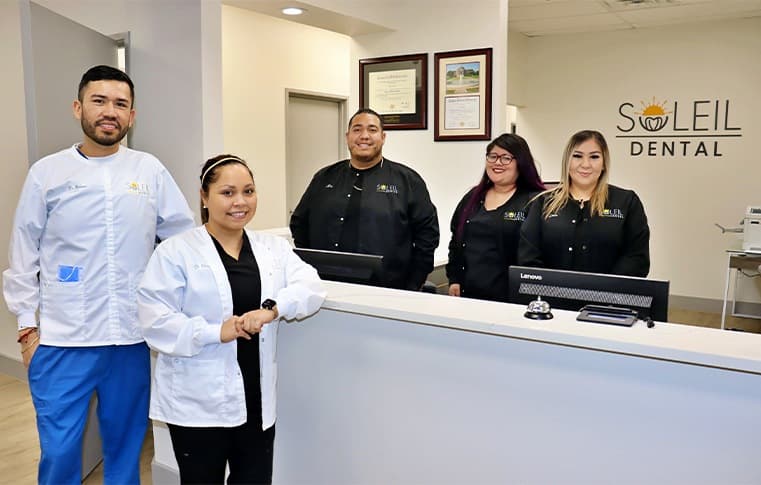
BOTOX and Opus are offered at our Oak Lawn office. At your consult you'll meet the provider who treats you, and you're always welcome to ask about their training and experience.
Questions