Restore
Replace a missing tooth with one that feels like yours.
A dental implant is a small titanium post that takes the place of a tooth root. Once it bonds with your jaw, it can hold a crown, a bridge or a full denture. At Soleil, implants are placed right here in the office and every one is planned with 3D imaging, so you see the plan, the timeline and the cost before anything starts.
What is a dental implant?
Think of it in three parts. The implant is the post that sits in the bone where the root used to be. The abutment is a small connector that rises just above the gumline. The restoration is the part you see and chew with: a crown for one tooth, a bridge for a few, or a denture for a whole arch.
Because the implant is anchored in bone, it doesn't lean on the teeth next to it the way a traditional bridge does, and it doesn't rest on your gums the way a regular denture does. That's why implants feel steady when you bite into something real, like a street taco or a crisp apple.
There's a health side too. Where a tooth is simply missing, the jawbone tends to shrink over time, and neighboring teeth can drift into the gap. An implant keeps the space filled and gives the bone the everyday pressure of chewing, which helps slow that shrinking down.
Why we plan every implant in 3D
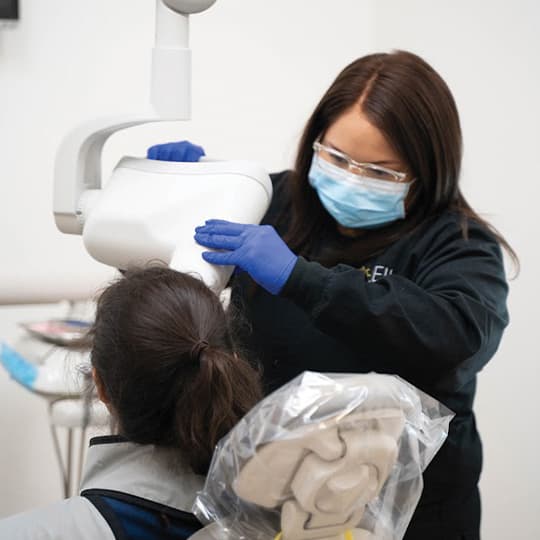
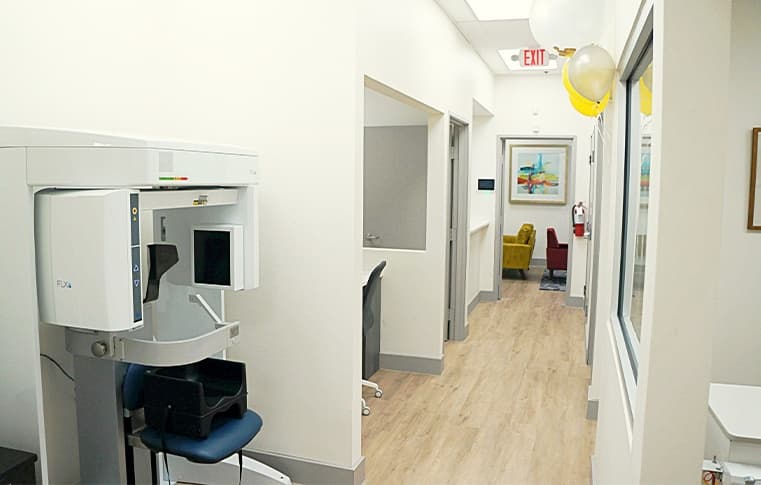
Before your dentist recommends anything, you'll get a scan on our i-CAT cone beam machine. You stand still for about 30 seconds while it circles your head, and we get a 3D view of your jawbone, nerves and sinuses. A flat x-ray can't show how wide or dense the bone is. The 3D scan can.
That scan decides a lot: the size of the implant, the angle it goes in, whether there's enough bone, and whether something like an old infection needs attention first. We go through it with you on screen, so you're looking at the same picture we are.
Your final crown or bridge is made from a digital scan of your teeth too, not a tray of putty. If you've ever gagged on an impression, you'll like that part.
Who is a good candidate for dental implants?
Most healthy adults who are missing one or more teeth can get implants, or can get there after some prep work.
Not a candidate today doesn't mean never. Plenty of people get there after treating gum disease, removing a failing tooth or adding bone with a graft. We handle extractions and gum treatment here, and we'll help arrange anything that calls for a specialist.
Here's what we look at:
- Enough healthy jawbone to hold the implant, or a plan to build it up with a graft
- Healthy gums, since active gum disease is one of the main reasons implants run into trouble
- Overall health that allows a minor oral surgery. Uncontrolled diabetes, some medications and smoking can slow healing, so we go over your health history closely
- A jaw that's done growing. Most dentists wait until the late teens or early twenties
- A willingness to brush, floss and keep your checkups, because implants need the same daily care as natural teeth
Missing one tooth, a few, or all of them
One tooth: a single implant topped with a custom crown. The teeth on either side stay untouched, which is the big advantage over a traditional bridge, where the neighbors get shaped down to hold the new tooth.
A few teeth in a row: you usually don't need an implant for every missing tooth. Two implants can often hold a three-tooth bridge, which means less surgery and a lower cost than three separate implants.
All your teeth, top or bottom: this is where implant dentures come in. Instead of relying on suction and adhesive, a full arch of teeth attaches to several implants, often four to six. A snap-on denture clicks onto the implants and comes out at night for cleaning. A fixed full arch stays in, and only the dentist removes it. Fixed usually costs more and feels closest to natural teeth. Snap-on is simpler and easier to clean.
If you wear a denture now and it slips, rubs or keeps you from eating what you like, ask us to price a regular denture and an implant denture side by side. Seeing both on paper makes the decision a lot easier.
What are the steps of getting a dental implant?
Consult and 3D scan. Your dentist looks at your mouth, your health history and the scan, then walks you through your options with a written estimate. No commitment, no pressure.
Prep, if you need it. That can mean removing a damaged tooth, treating gum disease or placing a bone graft. Some complex grafting cases are referred to a trusted specialist, and we'll tell you upfront if yours is one of them.
Placement. The area is numbed, and nitrous oxide or oral sedation is available if you're nervous. The implant goes into the bone through a small opening in the gum, and a cap protects it while it heals. Many people say it was easier than they expected.
Healing. Over roughly 3 to 6 months, the bone grows tight around the implant. This is called osseointegration, and it's what makes an implant strong. If the space shows when you smile, we'll talk through temporary options so you're not left with a gap.
Your new tooth. We attach the abutment, take a digital scan and have your crown, bridge or denture made to match your smile. At the last visit we check your bite and fine-tune it until it feels like it was always there.
What is recovery like after implant surgery?
Most people take it easy for a day or two and then get back to normal. Expect some soreness, mild swelling and a little oozing at first. Over-the-counter pain relievers taken as directed handle it for most people, and a cold pack on your cheek helps during the first day. Several implants or a graft can mean a bit more downtime.
Call us if pain gets worse after the third day instead of better, swelling keeps growing, you run a fever, or bleeding doesn't slow down with gentle pressure on a gauze pad.
For the first several days, protect the site:
- Skip straws, smoking and vaping, which can disturb the clot and slow healing
- Don't spit hard. Let rinse water fall out of your mouth instead
- Eat soft foods like eggs, yogurt, pasta and lukewarm soup, and chew on the other side
- Brush gently, even near the site, and rinse with warm salt water as directed
- Keep your tongue and fingers off the area, even though it's tempting
How much do dental implants cost?
We don't quote implants over the phone, because two people missing the same tooth can need very different work. After your consult you'll get a written estimate broken down by step, so you can see where every dollar goes.
It also helps to think long term. A bridge or regular denture often costs less upfront but usually needs replacing sooner. An implant that's cared for can last many years. Here's what moves the price:
- How many implants you need, and whether they hold a crown, a bridge or a full arch
- Prep work like extractions, gum treatment or bone grafting
- The restoration itself and its material, such as porcelain, zirconia or a full denture
- Sedation, if you'd like it
- Your insurance benefits and how much of your yearly maximum is left
Does insurance cover dental implants?
Sometimes, and usually only part of it. Implant coverage varies more than almost anything else in dentistry. Some plans pay a share of the implant and crown, some only cover related steps like the extraction or x-rays, and some exclude implants entirely. Most plans also have a yearly maximum that caps what they'll pay.
We're in network with Delta Dental, Aetna, Blue Cross Blue Shield, Cigna, Dentamax, Guardian, Humana, MetLife, United Concordia and UnitedHealthcare, and we check your benefits before you commit. When a case has several steps, it can sometimes be timed across two plan years so you can use two yearly maximums.
No insurance? The Sunshine Membership is $119 a year and takes 20 to 30% off treatment, depending on the procedure (conditions apply). Sunbit and Cherry offer monthly payment plans, so you can spread the cost out instead of paying all at once.
Implant, bridge or denture: how do you choose?
An implant is the closest thing to a natural tooth, but it isn't the right answer for everyone. A traditional bridge can be quicker, with no surgery and no healing period, and it makes sense when the teeth next to the gap already need crowns. A regular denture is the most affordable way to replace a full arch, and a well-fitted one works for a lot of people.
Implants win on stability, on leaving healthy teeth alone and on protecting the jawbone. They take longer and cost more upfront. We'll lay out every option that fits your mouth, including the ones that don't involve implants, and you decide.
How long do dental implants last?
The implant post can last for decades, and for many people the rest of their life, as long as the gums and bone around it stay healthy. The crown on top does the daily chewing and, like any crown, may need replacing someday.
Implants can't get cavities, but the gum around them can get infected. That's called peri-implantitis, and it's one of the most common reasons implants fail. Smoking, uncontrolled diabetes, grinding your teeth and skipping cleanings all raise the risk. Each of those is something we can plan around, with a nightguard, more frequent cleanings or a quick talk with your physician.
Already have an implant that feels off?
Implants can run into trouble years later, including ones placed somewhere else. Watch for soreness, gums that bleed or pull back around the implant, a bad taste, or a crown that feels loose or shifts when you bite.
Don't wait on it. A loose crown is sometimes just a screw or cement issue that's simple to fix, and gum infection caught early can often be treated with a deep cleaning and closer follow-up. We'll evaluate it with a 3D scan and tell you honestly what can be saved and what can't.
How it goes
Scan and plan
Consult with our dentists, a 3D scan and a written plan with cost.
Place
The implant is placed with local anesthetic; sedation is available.
Heal
Usually 3 to 6 months while the implant bonds with your bone.
Restore
Your final crown, bridge or denture, made from a digital scan.
What it costs
Implant cost depends on how many teeth, whether you need grafting and which restoration you choose. You'll get a written estimate after your 3D scan. Many dental plans cover part of implant treatment, and Sunbit and Cherry offer monthly payment plans. No insurance? The Sunshine Membership takes 20 to 30% off treatment, depending on the procedure (conditions apply).
Insurance and financingYour dentists
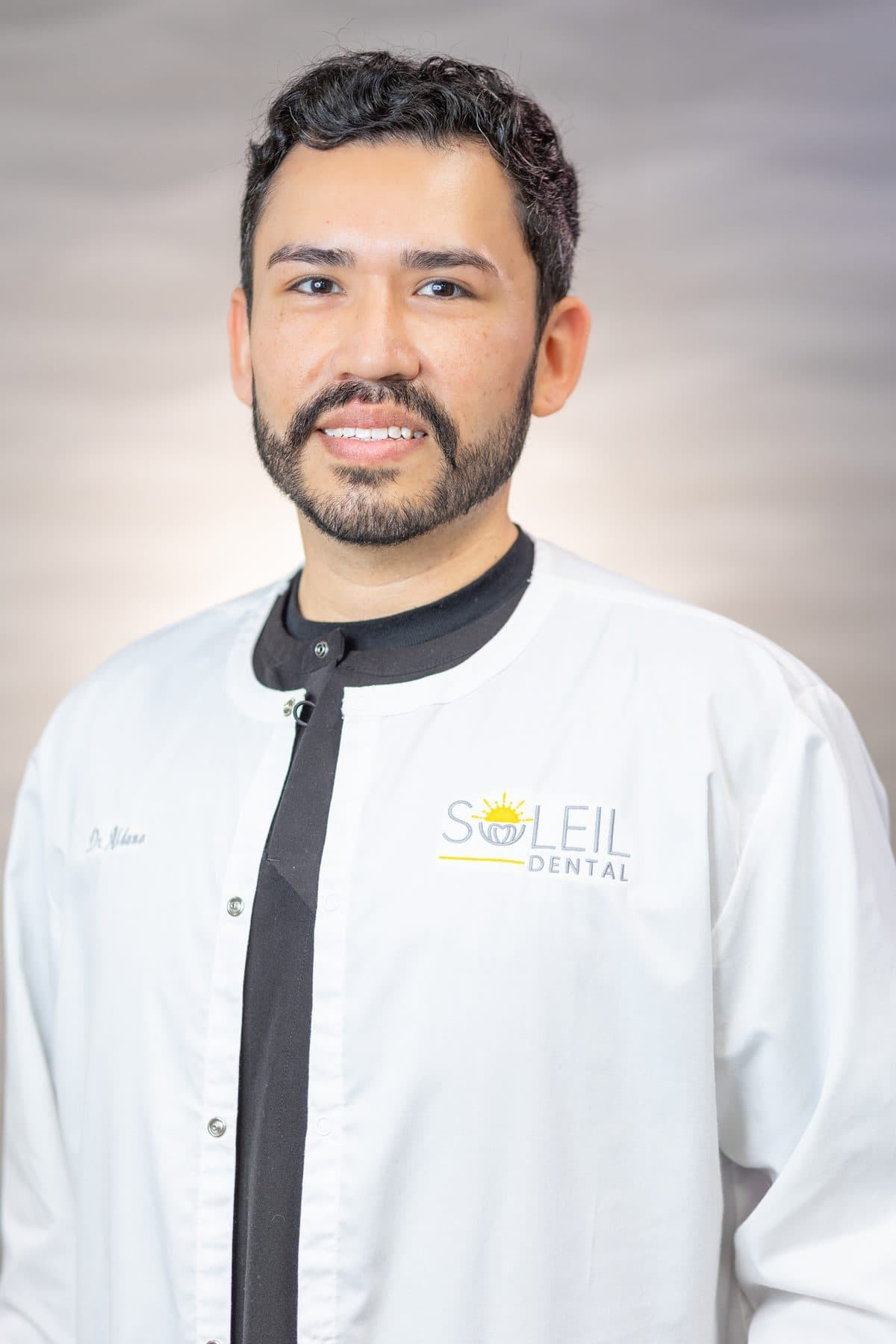 Dr. Jose AldanaCo-owner. UNT and Texas A&M Baylor College of Dentistry.
 Dr. Diana VazquezCo-owner. SMU and Baylor College of Dentistry.
Implants are planned and placed right here at Soleil, and you'll get a 3D scan and a written plan before anything starts.
Questions
What people ask.
Does getting an implant hurt?
How long does the whole implant process take?
How much time off work will I need?
Am I too old for implants?
Can implants get cavities?
Will people be able to tell it's an implant?
Can I get implants if I take blood thinners?
Can an implant go in the same day a tooth is pulled?
Do you place implants at your office?
Do you offer implant dentures?
Keep exploring
 DenturesFull, partial and implant dentures, fitted until they feel like yours.
 Dental bridgesA fixed bridge for one to three missing teeth, on crowns or implants.
 Tooth extractionsSimple and surgical extractions, numbing first, with a plan for what's next.
 Gum disease treatmentGum checks, deep cleanings and a plan for gums that bleed.