The short answer
It depends on your case, and any honest office will tell you that. The price is built from separate parts: the consult and 3D scan, any extraction or bone graft, the implant post, the abutment, the crown, bridge or denture on top, and sedation if you want it. One tooth with healthy bone costs far less than a full arch that needs grafting. A written, itemized estimate after a 3D scan is the only number worth trusting.
On this page10
Why do implant quotes in Dallas vary so much?
Call five offices around Dallas and you can get five very different numbers. Usually they aren't pricing the same thing. One quote covers only the post that goes into the bone. Another includes the scan, the abutment and the crown. A third assumes you won't need a graft, then adds it later once someone actually looks at your bone.
Real differences matter too. The brand and material of the implant, the lab that makes your crown, whether the office plans with a 3D scan, and who places the implant all affect the price. So does your mouth. Two people missing the same molar can need very different work if one has thick, healthy bone and the other lost that tooth years ago to an infection.
That's why a phone quote can't tell you much. The useful question isn't 'how much is an implant?' It's 'how much is the whole job, for my mouth, start to finish?'
What's actually included in a dental implant bill?
A single implant is really a series of steps, and each one is usually its own line on the estimate. Here's what you might see:
- Consult and 3D scan: the exam and cone beam image that show how much bone you have and where the nerves and sinuses sit
- Extraction: removing a failing tooth first, if it's still there
- Bone graft: adding bone where it's too thin or short to hold an implant, sometimes at the same visit as the extraction
- Implant post: the titanium piece that goes into the bone and acts as the new root
- Abutment: the connector that joins the post to the tooth on top, often stock, sometimes custom made
- Restoration: the crown, bridge or denture you actually see and chew with
- Sedation and temporaries: nitrous oxide or an oral sedative if you're nervous, and a temporary tooth if the gap shows while you heal
Not everyone needs every line. A gap that healed months ago with plenty of bone may skip the extraction and graft. A cracked front tooth may need all of it, plus a temporary.
How does the cost change for one tooth, several teeth or a full arch?
The number of implants drives the cost more than anything else, but more missing teeth doesn't always mean one implant per tooth. A few implants can hold a bridge, and four to six can often hold a whole arch. Here's what moves the price in each case.
| Option | What you're paying for | What moves the price |
|---|---|---|
| Single implant | 1 post, 1 abutment, 1 crown | Grafting, extraction, crown material |
| Implant bridge | Usually 2 posts holding 3 or more teeth | Number of posts, bone at each site |
| Snap-on denture | Several posts plus a removable denture | Number of posts, attachments, denture type |
| Fixed full arch | Several posts plus a fixed set of teeth | Number of posts, grafting, final material |
How do you compare implant quotes apples to apples?
Ads for low implant prices are everywhere. Some are fine. Many cover only the post, and the abutment, crown, x-rays, extraction or graft get added later. Before you compare two numbers, make sure they describe the same work. Ask each office to answer these in writing:
- Does this price include the consult, the 3D scan and any x-rays?
- Is the abutment included, and is it stock or custom?
- Is the crown, bridge or denture included, and what is it made of?
- If I need an extraction or bone graft, what does that add?
- Is a temporary tooth included while I heal?
- Who places the implant, and who makes the final tooth?
- What happens, and what do I pay, if something needs to be redone?
If an office won't itemize, treat that as a red flag. A clear estimate lets you choose on care and fit, not on guessing which quote is hiding what.
Is an implant worth it compared with a bridge or denture?
Upfront, an implant usually costs more than a traditional bridge or a regular denture. Over the long run the picture can change. A bridge relies on the teeth on each side, and if one of those teeth runs into trouble later, the whole bridge may need to be redone. A regular denture often needs relines and replacement as the jaw shrinks underneath it.
An implant that's well cared for can last for many years, often decades for the post itself, while the crown on top may need replacing someday. It also leaves healthy neighboring teeth alone. None of that makes an implant right for everyone. If the teeth next to your gap already need crowns, a bridge can be the smarter spend. If you need a full arch replaced on a tight budget, a well-made denture works for a lot of people.
Ask for the options that fit your mouth side by side, with a cost for each. Seeing them on paper usually settles the question.
Does dental insurance pay for implants?
Sometimes, partly. Coverage for implants varies more than almost anything else in dentistry. Some plans pay a share of the post and crown as a major service, often around half after the deductible. Some cover only the related steps, like the extraction, x-rays or crown. Some exclude implants entirely.
A few plan rules matter a lot here. Your yearly maximum caps what the plan pays, and implant cases can use it up quickly. New plans often have waiting periods before major work is covered. Some plans won't pay to replace a tooth that was missing before your coverage started. Others pay only what they would for a cheaper option, like a bridge, and you cover the difference.
Two moves can help. Ask for a pre-determination, a written estimate from your insurer before you start. And because implant treatment is spread over months anyway, the steps can sometimes be timed across two plan years so you use two yearly maximums. Our guide on using your dental benefits before they reset walks through that timing.
How can you pay for implants without insurance?
You have more options than paying the whole bill at once. Sunbit and Cherry offer monthly payment plans, so the cost is spread out instead of landing in one month. You can see how they work on our financing page.
The Sunshine Membership is $119 a year and includes 2 exams with x-rays, unlimited emergency exams and 20 to 30% off treatment, depending on the procedure (conditions apply). For someone without insurance who's planning implant work, that discount can add up.
If you have a health savings account (HSA) or flexible spending account (FSA), implants are often an eligible expense because they're medical, not cosmetic. Rules vary, so check with your plan administrator before you count on it.
What can make an implant cost more later?
The cheapest implant is the one that lasts. A few habits and conditions raise the chance of problems down the road, which can mean more visits, more treatment or a replacement.
- Gum disease: infection around an implant, called peri-implantitis, is one of the main reasons implants fail, so gums get treated first
- Smoking and vaping: both slow healing and raise the risk of the implant not bonding well
- Grinding or clenching: heavy force can crack crowns and loosen parts, so a nightguard is often part of the plan
- Skipping cleanings: implants need the same checkups and home care as natural teeth
Waiting has a cost of its own. After a tooth is lost, the bone in that spot tends to shrink. Replacing it years later is more likely to need a graft than replacing it soon after.
How does implant pricing work at Soleil Dental?
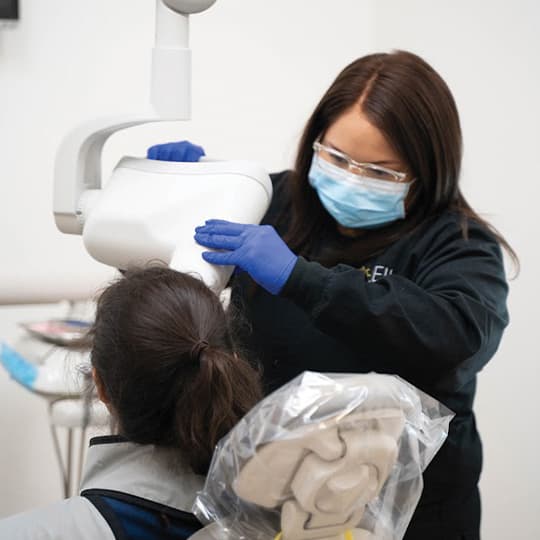
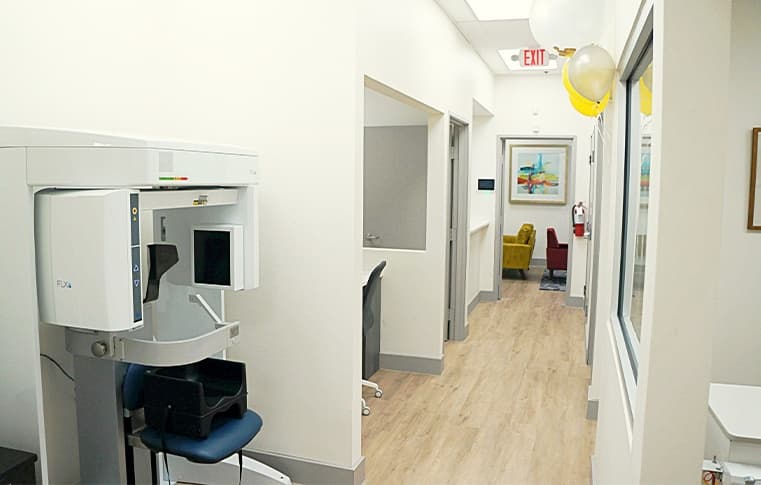
At our Oak Lawn office, implants are placed right here and each one is planned with our i-CAT 3D cone beam scanner. You'll see the scan on screen with your dentist, and after the consult you get a written estimate broken down by step, so you know what each part costs before you commit.
Some complex grafting cases are referred to a specialist, and we'll tell you upfront if yours is one of them. We're in network with Delta Dental, Aetna, Blue Cross Blue Shield, Cigna, Dentamax, Guardian, Humana, MetLife, United Concordia and UnitedHealthcare, and we check your benefits and can send a pre-determination before treatment starts.
Questions people ask.
Why won't a dental office give me an implant price over the phone?
Do I have to replace every missing tooth at once?
Will my medical insurance help pay for an implant?
Can I use Sunbit or Cherry along with my dental insurance?
Is the new patient visit a good first step if I'm thinking about implants?
Does the crown material change the price?
This guide is general information, not a diagnosis. Every mouth is different, so the right plan for you starts with an exam. Reviewed by Dr. Jose Aldana, .