The short answer
Most jaw pain from clenching comes from overworked chewing muscles and a strained jaw joint, a problem dentists call TMD. It usually improves with simple steps: softer foods, catching yourself clenching during the day, warm compresses, and often a custom splint worn at night. Many people feel a difference within about six to eight weeks of nightly wear. Pain that keeps returning, a jaw that catches or locks, or wearing teeth are worth an exam.
On this page11
What's the difference between TMJ and TMD?
TMJ is the joint itself, the temporomandibular joint. You have one in front of each ear, where your lower jaw hinges and slides against your skull. TMD, temporomandibular disorder, is the umbrella name for problems with those joints or the chewing muscles that move them. So when someone says "I have TMJ," they almost always mean TMD. A lot of TMD is sore muscle rather than damage inside the joint, and muscles tend to respond well to simple care.
What are the signs your jaw pain could be TMD?
You don't need all of these. Many people have two or three:
- A sore or tired jaw when you wake up, like you chewed gum all night
- Headaches at the temples, often worst in the morning
- Clicking, popping or a gritty sound when you open, chew or yawn
- A jaw that catches, shifts to one side, or briefly won't open all the way
- Ear fullness or ear pain, even though an ear exam comes back normal
- Teeth that look flat, chipped or worn, or feel sensitive for no clear reason
- A wavy, scalloped edge on your tongue, or a white ridge inside your cheek
Any one of these can have other causes. Together, and especially when they're worse in the morning, they tend to point toward clenching or grinding.
Why do people clench or grind their teeth?
Clenching is pressing your teeth together hard. Grinding is sliding them back and forth. Daytime clenching tends to happen while you concentrate: driving, working at a screen, lifting at the gym. Night grinding happens in your sleep, so you usually don't know unless someone hears it or your dentist spots the wear.
It's rarely just one trigger. Common ones include stress, poor or broken sleep, a lot of caffeine, forward head posture from long hours at a desk or on a phone, chewing gum or ice all day, and bite changes, like a new crown that sits a little high. Loud snoring or waking up gasping is worth mentioning to your physician, since sleep breathing problems and grinding sometimes go together.
That force also lands on your teeth. Clenching can crack teeth, break fillings, loosen crowns and strain implants, so protecting your dental work matters as much as the work itself.
Do I have TMJ? A quick self-check
This isn't a diagnosis. It's a way to decide whether an exam is worth your time. Ask yourself:
- Do I wake up with a sore jaw, tight face or headache more than once a week?
- Does my jaw click, pop or catch when I open wide?
- Can I open wide enough to fit about three stacked fingers, without pain?
- Do I catch myself with my teeth touching during the day?
- Has anyone told me I grind in my sleep?
- Are my front teeth getting shorter, flatter or chipped?
A few yeses, or trouble with the finger test, make an exam worthwhile. A no across the board doesn't rule TMD out if you still hurt.
What can you do for jaw pain at home this week?
These steps calm many flare-ups and help any treatment work better:
- Go soft for a week or two: eggs, pasta, soup, fish, small bites. Skip steak, bagels and anything you have to tear.
- Use warmth on tight, achy muscles and a cloth-wrapped cold pack for sharp flare-ups, 10 to 15 minutes at a time.
- Practice the resting position: lips together, teeth apart, tongue resting lightly on the roof of your mouth.
- Stop chewing gum and ice completely.
- Put a small sticker on your monitor or steering wheel. Each time you see it, check your jaw and let it go loose.
- Try gentle stretches, like slowly opening and closing, only if they don't hurt. Pain means stop.
- Over-the-counter pain relief can help if it's safe for you, taken as the label or your doctor directs.
If you're not clearly better in a couple of weeks, or the pain keeps coming back, that's the time for an exam.
Night guard vs. splint vs. boil-and-bite: what's the difference?
All three sit between your teeth, but they do different jobs. A custom night guard is mainly armor: it takes the wear so your teeth don't. An occlusal splint is a treatment appliance, hard and adjusted so your jaw can rest in a more relaxed position, giving sore muscles and the joint a break. A store-bought boil-and-bite guard is a stopgap.
| Night guard | Occlusal splint | Boil-and-bite | |
|---|---|---|---|
| Fit | Made from a scan of your teeth | From a scan, tuned to your bite | Molded at home in hot water |
| Material | Hard or two-layer plastic | Hard, clear acrylic | Soft, thick plastic |
| Main job | Protects teeth from grinding | Calms jaw muscles and joint | Short-term protection |
| Lasts | Often years with care | Often years, with adjustments | Often a few months |
Soft guards feel comfortable, but some people chew on them, which keeps the muscles working. Someone who grinds without pain may only need a night guard. Someone with sore muscles, morning headaches or clicking usually does better with a splint.
What happens at a dental TMJ exam?
Expect questions first: where it hurts, when it started, what makes it better or worse, and how you sleep. Then the dentist presses gently on your jaw muscles, temples and joints to find tender spots, checks how far and how straight you open, and listens for clicking as you move. They'll check how your bite comes together and look for wear, cracks and loose dental work.
X-rays help rule out other causes, like a tooth problem that feels like jaw pain. When the joint needs a closer look, 3D imaging can show its bone in detail, and we'll tell you if yours calls for it.
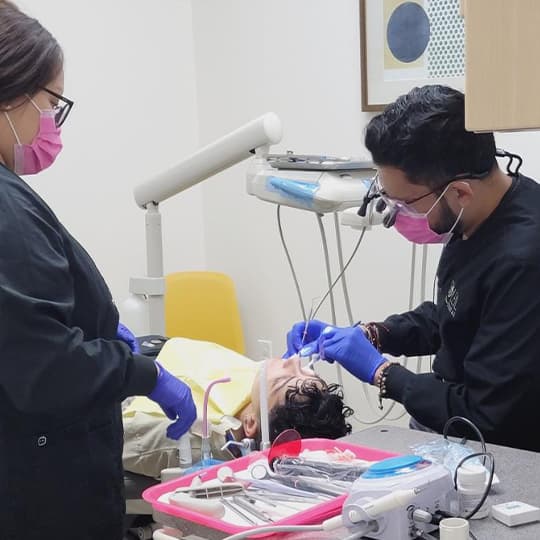
At Soleil Dental in Oak Lawn, both doctors evaluate jaw pain and clenching and make custom occlusal splints, so you can see whoever fits your schedule. If you need a splint, it's made from a digital scan of your teeth, no putty trays, then fitted and adjusted in the chair. There's more on our TMJ treatment page.
How long does it take for TMJ pain to get better?
It's gradual. Home care can take the edge off a flare-up within days. With a splint, many people notice a real difference within about six to eight weeks of wearing it every night, and the full benefit often takes three to six months while the muscles settle. Timelines vary, and nightly wear matters more than anything.
Expect a follow-up or two to fine-tune the fit, and some ups and downs in stressful weeks. If you're not improving, the plan should change.
Sometimes the bite is part of the problem, like teeth that hit unevenly or a bite that pushes the jaw to one side. Straightening teeth with aligners or braces can help some of those people, but orthodontics isn't a first step for most jaw pain. It comes after the basics, when the bite is truly a factor. Our guide to Invisalign vs. braces compares both.
Can TMJ cause headaches or migraines?
Your jaw muscles fan out across your temples, so a tight, overworked jaw can cause tension headaches that start there, often first thing in the morning. Those tend to ease when the clenching does.
Migraines are different. Researchers have found that TMD and migraines often show up in the same people, but that association isn't proof that TMD causes migraines. For some people, jaw pain seems to be one more trigger, and calming the jaw may mean fewer or milder headaches. Keep your physician in charge of migraine care, and treat the jaw as one piece of the picture.
When should you see a physician, or go to the ER?
A dentist is a good first stop for jaw pain, but some symptoms call for a physician or specialist too: hearing loss, ringing, ear drainage or dizziness; sharp, electric or burning face pain, or numbness; swelling or stiffness in other joints that could be arthritis; or pain that keeps going despite a fair trial of care.
If your jaw locks during office hours, call first. Our emergency dentist page explains how urgent visits work.
Questions people ask.
Why does my jaw hurt more in the morning?
Should I wear my splint during the day too?
Will a splint change my bite?
How do I clean my night guard or splint?
Do kids grind their teeth?
This guide is general information, not a diagnosis. Every mouth is different, so the right plan for you starts with an exam. Reviewed by Dr. Jose Aldana, .